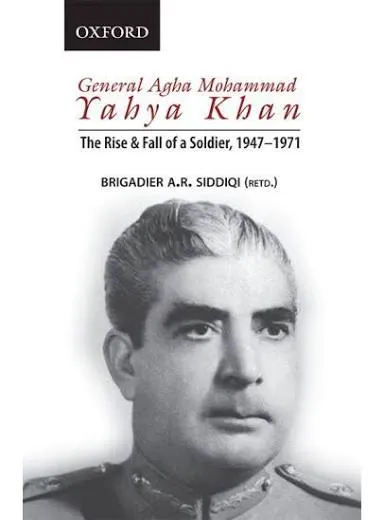
General Agha Mohammad Yahya Khan (1917–1980) remains one of the most pivotal and controversial figures in Pakistan’s political history, serving as the third President from 1969 to 1971. A career soldier who rose to become Commander-in-Chief of the Pakistan Army, he assumed power following the resignation of Ayub Khan. His presidency is most significantly defined by the oversight of Pakistan’s first-ever general elections in 1970, which were widely regarded as free and fair. However, the subsequent political deadlock between the Awami League and the Pakistan Peoples Party led to a catastrophic civil war.
Yahya Khan’s administration presided over the military crackdown in East Pakistan and the ensuing conflict with India, which ultimately resulted in the fall of Dhaka and the secession of East Pakistan to form Bangladesh. Facing immense public pressure and military defeat, he resigned in December 1971, handing over power to Zulfikar Ali Bhutto. His legacy is characterized by the complex duality of his professional military achievements and the political failures that led to the country's dismemberment.